
Model access is splintering
Each provider, route, SKU, and SDK has its own limits, pricing, release cycle, and operational behavior.
Route AI workloads across Canadian and global models through one sovereign control plane, with privacy controls, optional PII substitution, and a verifiable AI Chain of Custody for every request.
We are planning Canadian-owned capacity for teams with data-residency, no-US-cloud, or controlled-goods requirements. Tell us which model you need and the minimum monthly usage you could commit after launch.
Requests start at $5,000 in monthly usage after launch. No payment, reservation, or contract is created today.
Next, we review your request and contact you about fit and a written launch proposal.
https://northerninference.ca/v1

import os
from openai import OpenAI

client = OpenAI(
    base_url="https://northerninference.ca/v1",
    api_key=os.environ["NI_API_KEY"],
)

response = client.chat.completions.create(
    model="YOUR_MODEL_ID",
    messages=[{"role": "user", "content": "Hello from NI"}],
    max_tokens=200,
)

print(response.choices[0].message.content)
import os
from anthropic import Anthropic

client = Anthropic(
    base_url="https://northerninference.ca/v1",
    api_key=os.environ["NI_API_KEY"],
)

message = client.messages.create(
    model="YOUR_MODEL_ID",
    max_tokens=200,
    messages=[{"role": "user", "content": "Hello from NI"}],
)

print(message.content[0].text)
YOUR_MODEL_ID asks for a route whose processing stays in Canada.
The API key permits Tier 3. Region, spend, and audit controls pass before provider access.
Northern Inference selects an eligible backend and returns custody evidence for the target used.
The full Bedrock route asks for the global Sonnet 4.5 deployment.
The API key permits Tier 4. Model, spend, and audit controls pass before provider access.
The provider call uses an NI-managed credential and records the multi-region custody path.
Each routed model request has a chain-of-custody record identifying the route Northern Inference selected, including provider, region, jurisdiction, and credential source. Tier 3 routing fails closed: a request that cannot stay on an eligible Canadian route is blocked, not silently rerouted. The portal and API record carries an integrity digest and, when signing is available, Northern Inference's Ed25519 signature. This attests the NI-selected path up to the provider boundary. Provider documentation, attestations, and contracts govern inference location and data handling inside the provider. See each model's data-use posture.
For a Tier 3 request, NI selects a supported Canadian provider deployment and blocks the call if that residency guarantee cannot be met. It does not silently fall back to another jurisdiction.
At Tier 3 we route to Canadian regions such as AWS ca-central-1 and Azure Canada East. The routing layer fails closed when a request cannot be served in the selected jurisdiction.
Each model response identifies the resolved route, provider region, jurisdiction, custody path, and whether the provider call used NI-managed or customer BYOK credentials. These response headers are unsigned route evidence; the portal preserves the corresponding digest and, when signing is available, Northern Inference's signature.
For every model route we publish where training, logging, and retention stand, each claim cited to the provider's own dated documentation with a link to the live source. Browse the posture.
Select your privacy level by choosing the exact model route. Tier 1 customer-hosted and Tier 2 NI sovereign hardware are planned; Tier 3 Canadian cloud and Tier 4 provider-default access are live.
Opt-in detection and substitution replaces supported identifiers before the provider call and restores them in the response. Operational audit metadata records that substitution occurred without storing the original prompt.
Runs on AWS Canada infrastructure that holds SOC 2 Type II, ISO 27001, and PCI-DSS (AWS attestations, not NI's). ITSG-33 PBMM control mapping in progress. Full status on our Trust page.
Transparent per-token rates and clear invoicing in CAD. Credit purchases carry the disclosed 9% service fee. Usage, fees, and balance deductions remain separately reviewable.
OpenAI-compatible chat completions and Anthropic-compatible Messages endpoints support common SDKs and tools. Feature compatibility depends on the endpoint and selected provider route.
Priority access and dedicated onboarding for government and public sector organizations.
Capability is abundant. Governance is not. Regulated teams need model access, residency, custody, spend control, and auditability to move together.
Each provider, route, SKU, and SDK has its own limits, pricing, release cycle, and operational behavior.
Teams need the resolved jurisdiction for each request, not just a marketing label attached to a provider.
BYOK should preserve customer custody while still producing request IDs, costs, hold behavior, and traceable routing.
Hard-coding provider names turns routine model churn into application rewrites and security review churn.
Rate limits, spend caps, model allowlists, and billing holds need to be enforced before tokens are generated.
Operators need logs, route decisions, pricing freshness, provider status, and alerts in one control surface.
Northern Inference turns each model request into a governed path with an exact provider destination and reviewable custody evidence.
The request model is the route key. It selects the model and service tier without hidden tier headers; Northern Inference records the backend target used.
API keys authorize the route tiers they may call. Canadian and global paths remain explicit in product and logs.
Attach provider credentials to NI API keys, route through NI, and keep provider billing in the customer's account.
Every routed model response identifies the route, provider region, jurisdiction, and custody path Northern Inference recorded. It also shows whether the provider call used NI-managed credentials or the customer's BYOK credential. Portal records add cost, an integrity digest, and Northern Inference's signature when signing is available.
Per route we publish where training, logging, and retention stand, each claim cited to the provider's own dated documentation with a link to the live source. We attest the route to the provider boundary; inside the provider we cite, not assert. Browse the posture.
When tools send provider-native names, users can persist a safe mapping to the exact NI route they intend.
Discovery, pricing freshness, workers, live logs, provider keys, users, billing, and security events remain visible.
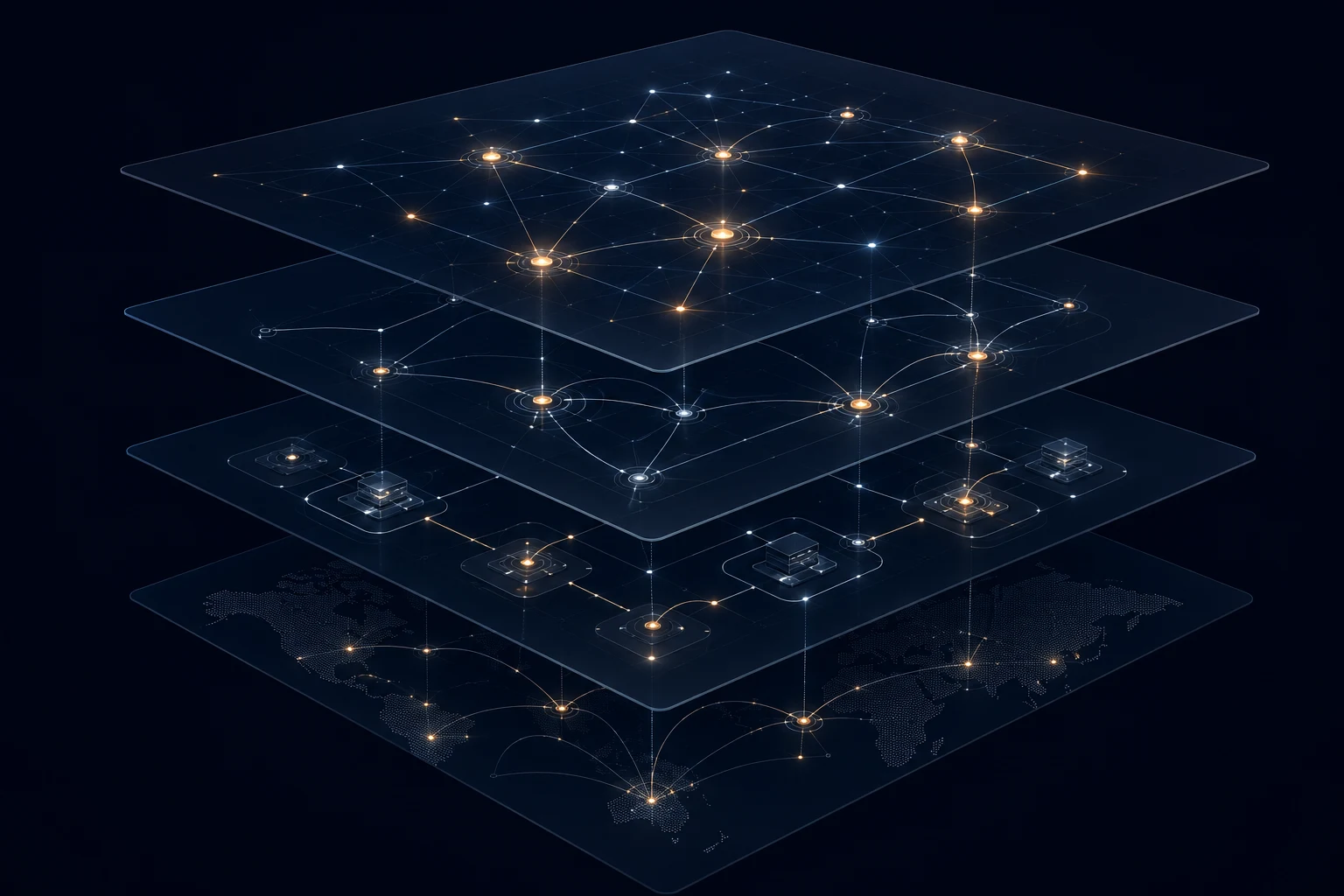
Every deployed model carries a privacy tier. You select it by choosing an exact route key, and your API key authorizes which tiers it may call. No tier headers, no per-request flags.
Your hardware, your premises, open-source models. NI tunnels API requests into your machine; only you ever see prompts and completions. The strongest privacy guarantee we offer. Phase 5 of our roadmap.
NI's own bare-metal, single-tenant, in a Canadian-owned data centre. We hold the keys and no US-owned cloud sits in the path. Sovereignty by control, not just residency. Phase 5 of our roadmap.
AWS Bedrock and Azure OpenAI routes in Canadian regions. Provider training, logging, and retention posture is published per route from the provider's current documentation.
Broader model access through NI-routed upstream providers outside the Canadian-residency boundary. This can include direct APIs, Bedrock in US regions, Azure GlobalStandard, Vertex US regions, and other provider-default routes.
Residency answers where your data sits. Sovereignty answers whose law reaches it. We are standing up Tier 2 on our own Canadian hardware: bare-metal we own, in a Canadian-owned data centre, with no US-owned cloud anywhere in the path.
Single-tenant bare-metal in a locked cage in a Canadian-owned facility. Not a VM on someone else's cloud.
The planned architecture keeps encryption keys under NI control and removes a third-party cloud provider from the inference path.
The planned Tier 2 path uses NI-owned hardware in a Canadian-owned facility, reducing reliance on foreign-owned cloud infrastructure.
The planned inference engine will isolate prompt and KV-cache state per tenant. The implementation must pass security review before this tier is marked live.
Tier 4 is access. Tier 3 is Canadian residency by contract. Tier 2 is sovereignty by control, the next rung on the ladder. The need is not unique to Canada or to controlled-goods programs: any government, regulated industry, or enterprise that wants control instead of a residency checkbox fits here.
Give teams a sanctioned path for model access with explicit route IDs and operator-visible custody. Tier 3 residency is enforced at the routing layer: a request that cannot be served in a Canadian region is blocked, not silently rerouted.
Use per-key controls, optional PII substitution, and route permissions while teams validate sensitive internal workflows.
Control model allowlists, token rates, caps, and custody so AI usage can be reviewed instead of guessed.
Keep provider credentials in customer custody with BYOK while NI records routing, request IDs, and fee state.
If your code already talks to OpenAI-compatible chat completions, start by changing the base URL and choosing an exact NI model route.
https://northerninference.ca/v1 as the API base.model route key.from openai import OpenAI # Before: locked to one provider client = OpenAI() # After: NI routes by exact model key client = OpenAI( api_key=os.environ["NI_API_KEY"], base_url="https://northerninference.ca/v1", ) response = client.chat.completions.create( model="YOUR_MODEL_ID", messages=[ {"role": "user", "content": "Summarize this memo."} ], max_tokens=200, ) print(response.choices[0].message.content)
from anthropic import Anthropic

# Before: locked to one provider
client = Anthropic()

# After: NI routes by exact model key
client = Anthropic(
    api_key=os.environ["NI_API_KEY"],
    base_url="https://northerninference.ca",
)

response = client.messages.create(
    model="YOUR_MODEL_ID",
    max_tokens=200,
    messages=[
        {"role": "user", "content": "Summarize this memo."}
    ],
)

print(response.content[0].text)
Northern Inference exposes the evidence operators need: exact route resolution, security events, billing state, provider status, and custody attribution.
Authenticated shells are served only after server-side session validation.
Operators can inspect discovery, pricing jobs, worker state, and stale sources.
Cross-tenant denials, BYOK lifecycle events, and admin actions are durable records.
Responses include the NI request ID, resolved route, custody path, and whether the provider call used NI-managed or customer BYOK credentials.
All models available through the NI API with transparent per-token pricing. Choose by model, tier, or data residency.
Managed Canadian cloud routes. Data residency stays in Canada when the exact route is Tier 3.
Provider-default or global routes. Use when model access matters more than Canadian residency.
Point OpenAI-compatible or Anthropic-compatible clients at NI and choose the model and service tier with an exact Northern Inference route key.
Supports OpenAI-compatible chat completions and Anthropic-compatible messages. Change the base URL and choose a route from the live catalog.
The live catalog includes enabled Claude, GPT, Gemini, Llama, Mistral, and other routes. The exact model key selects the Northern Inference service contract; custody evidence records the backend target used.
See the provider cost and our fee separately on every request. Thinking tokens billed at the rate shown per model. No expiring credits. No surprise overages.
Choose the exact route key on every API call. Route sensitive prompts through your own hardware (coming soon) and casual queries through cloud providers.
Names, emails, and identifiers are replaced with realistic fakes before reaching the model, then restored in responses. Opt-in per API key or per request.
Live dashboard with per-model, per-team cost breakdowns. Budget alerts and hard limits built in.
NI's routing control plane operates in Canada. The selected route constrains eligible processing boundaries, and each request records the actual provider region and jurisdiction used.
On supported routes, NI can mark stable prompt prefixes for provider caching automatically. Cache behavior, retention, jurisdiction, and price remain specific to the selected provider route and are disclosed in its data-use and pricing records.
Northern Inference is developer infrastructure, not a consumer chatbot.
| Northern Inference | Venice.ai | OpenRouter | Direct APIs | |
|---|---|---|---|---|
| Per-request privacy control | ✓ | ✗ | ✗ | ✗ |
| Canadian data residency (Tier 3 routes) | ✓ | ✗ | ✗ | ~ |
| Transparent pricing | ✓ | ✗ | ~ | ✓ |
| Standard API format | ✓ | ✓ | ✓ | ~ |
| Per-request custody trail | ✓ | ✗ | ✗ | ✗ |
| PII substitution | ✓ | ✗ | ✗ | ✗ |
| No crypto required | ✓ | ~ | ✓ | ✓ |
See provider-rated usage cost and any NI per-request fee separately. Credit purchases carry a 9% service fee. There are no monthly minimums, credits do not expire, and thinking-token rates are shown per model when applicable.
Portal access, model routing setup, and integration support for your team.